
Vehicle Depreciation and What It Means for Your Wallet
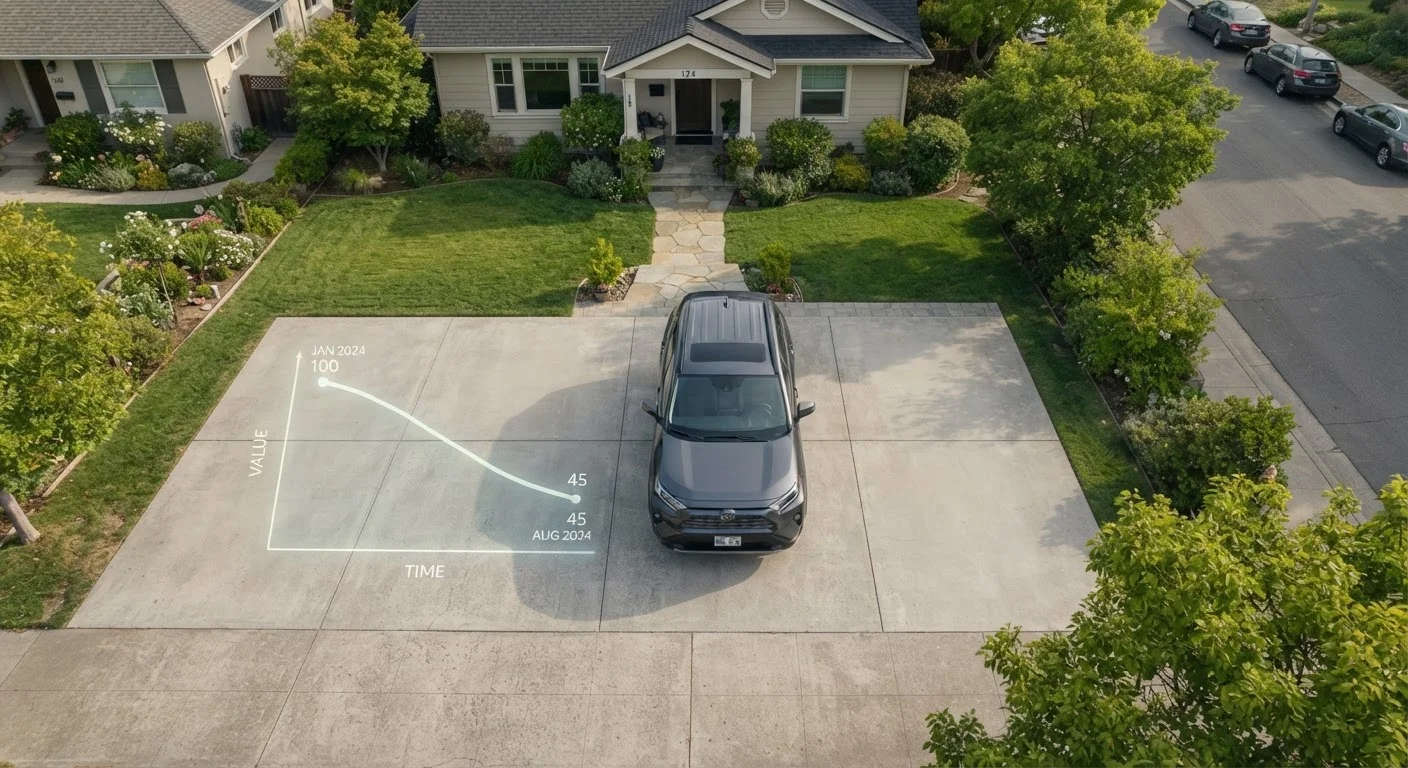
Photo credit: simplefuture.net
In this article
Learn how quickly cars lose value, which factors accelerate depreciation, and how to factor it into smarter ownership decisions.
Key Takeaways
- New cars typically lose 15 to 25 percent of their value in the first year of ownership.
- A vehicle can lose roughly half its original purchase price within five years.
- Mileage, condition, brand reputation, and market demand all influence how fast value drops.
- Buying a used vehicle a few years old shifts the steepest depreciation cost to the original owner.
- Keeping a vehicle longer reduces the annual depreciation cost spread across each year of use.
- Depreciation directly affects resale value, trade-in offers, and whether you owe more than the car is worth.
How depreciation actually works
When you buy a new vehicle, the transaction price is not what the market will pay for it the next day. The moment a car is registered and driven, it competes in the used-car market, where buyers expect a discount over new-car prices. That gap is the first slice of depreciation.
The decline is steepest in the early years. A vehicle that costs $35,000 new might be worth $26,000 to $29,000 after one year, and roughly $17,000 to $21,000 after five years, depending on the model and market conditions. After about five or six years, the annual dollar drop tends to flatten, because a large portion of the total value has already left.
Depreciation is sometimes described as the largest single cost of car ownership over time, ahead of fuel and insurance. For families evaluating whether to buy new or used, understanding this curve matters. See the full cost comparison of new versus used vehicles for a closer look at how the math plays out across different purchase scenarios.
Factors that speed up or slow down value loss
Not all vehicles depreciate at the same pace. Several factors push a car's value down faster or help it hold value longer.
- Mileage: Higher annual mileage reduces resale value because it signals more wear on mechanical components.
- Maintenance history: A complete service record gives buyers confidence. Gaps in documentation tend to lower offers.
- Brand reliability reputation: Vehicles from manufacturers with strong long-term reliability track records historically retain value better than those with weaker records.
- Color and trim: Neutral colors (white, black, silver, gray) consistently attract more buyers than uncommon colors, which affects resale demand and price.
- Fuel type and efficiency: When fuel prices shift significantly, demand for fuel-efficient vehicles can rise while large, less-efficient vehicles lose value faster.
- Market supply: A particular model that floods the used market pulls prices down for all similar vehicles.
15-25%
Value lost in first year of ownership
Industry estimates consistently place first-year depreciation for new vehicles in this range, though the exact figure varies by model and market.
~50%
Value remaining after five years
A vehicle purchased new commonly retains roughly half its original value by the end of year five, depending on brand, mileage, and condition.
$10,000+
Typical depreciation cost over first three years
For average-priced new vehicles, cumulative depreciation over the first three years of ownership often exceeds $10,000 in absolute dollar terms.
Condition matters beyond simple wear. Visible dents, stained interiors, and worn tires all reduce what a buyer will pay. Tire condition affects not just safety but the impression a vehicle makes at resale time.
What depreciation means for your loan and net worth
Depreciation and auto financing interact in a way that can cost families money they do not anticipate. When you finance a vehicle, your loan balance decreases according to your payment schedule. Your vehicle's market value decreases according to market forces. These two curves do not move in sync.
In the early months of a loan, a large share of each payment covers interest rather than principal. At the same time, the vehicle is losing value quickly. The result can be negative equity: a situation where the loan balance is higher than the car's current market value. This is sometimes called being 'upside down' on a loan.
Negative equity creates real constraints. If you need to sell the vehicle, you owe the lender the full remaining balance, not just what the car brings at sale. If the vehicle is totaled, the insurance payout is based on market value, not your loan balance. Understanding how APR and loan terms work helps you see how payment structure affects this risk. Longer loan terms, as explained in this guide to financing term length, can extend the period of negative equity.
Using depreciation to make ownership decisions
Awareness of depreciation shifts how you think about when to buy, what to buy, and how long to keep a vehicle.
Buying a vehicle that is two to four years old puts most of the steepest depreciation behind it. The original owner absorbed that early value loss, and you purchase at the lower price. The vehicle still has substantial useful life ahead.
Keeping a vehicle for many years spreads the total depreciation cost over more time, lowering the annual cost per year of use. A family that holds a vehicle for ten years pays less in annualized depreciation than one that trades in every three years, assuming reasonable maintenance costs. Annual ownership cost figures by vehicle class can help frame how depreciation compares to other recurring expenses like insurance and fuel.
Depreciation is also one cost among many. Maintenance decisions affect both operating costs and resale value simultaneously, so they interact with depreciation in practical ways. Thinking about total cost of ownership, rather than depreciation in isolation, gives a more complete picture of what a vehicle actually costs your household each year.
This article provides general financial education and is not personalized financial or investment advice. Consult a qualified financial professional for guidance specific to your situation.
Frequently Asked Questions

Author
Finance Editorial Team
Finance Editorial Team is the collective byline for our editorial team and contributor network. Articles published under this byline or an editorial pen name are researched, written, and reviewed according to our editorial standards for clarity, consistency, and independence before publication.
View all articles →