
Collision vs. Comprehensive Coverage: Choosing the Right Protection
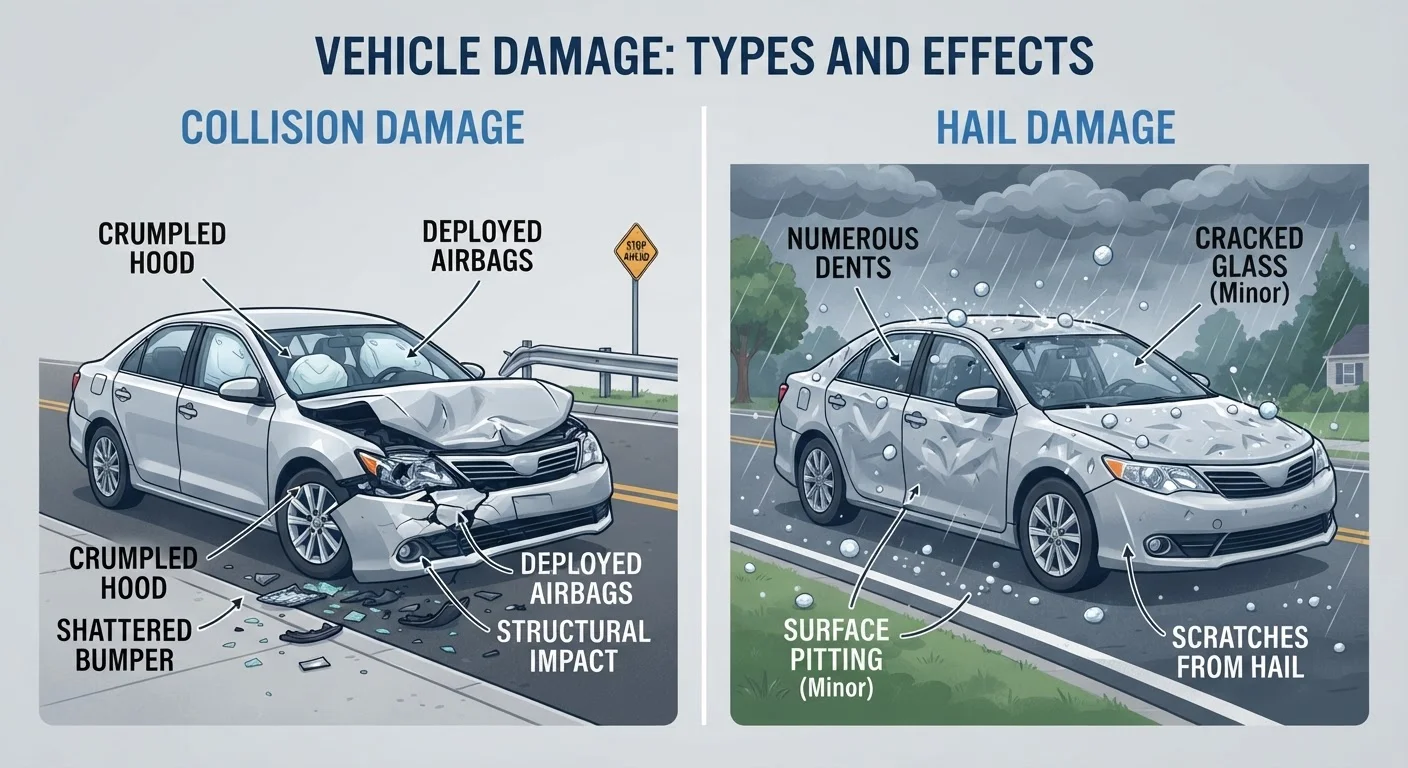
Photo credit: simplefuture.net
In this article
These two coverage types are often confused. Learn what each one actually covers and when carrying both makes financial sense.
Key Takeaways
- Collision covers damage from accidents involving your vehicle and another car or object.
- Comprehensive covers non-collision damage such as theft, hail, flooding, and animal strikes.
- Lenders typically require both coverages on financed or leased vehicles.
- Whether to carry one or both depends on your car's value and your financial cushion.
- Your deductible choice directly affects your premium for both coverage types.
What each coverage type actually does
Collision coverage pays to repair or replace your vehicle when it is damaged in an accident involving another vehicle or a stationary object, such as a guardrail, telephone pole, or parking barrier. It applies whether you are at fault or not, though your insurer may seek reimbursement from the other driver's insurer if they were responsible.
Comprehensive coverage handles a separate category of loss: damage that does not involve a collision. That includes theft, vandalism, fire, flooding, hail, falling objects, and animal strikes. If a deer runs into your car or a tree branch crushes your roof during a storm, comprehensive is the coverage that responds.
Both are optional under state law in most of the US, but they are typically required by lenders when you finance or lease a vehicle. For a broader look at how these fit into a full policy, see what families should know about auto insurance basics.
| Criterion | Collision Coverage | Comprehensive Coverage |
|---|---|---|
| What triggers a claim | Accident with vehicle or object | Theft, weather, fire, animals, vandalism |
| Fault requirement | None: applies regardless of fault | Not applicable: non-collision events |
| Required by lenders | Yes, on financed/leased vehicles | Yes, on financed/leased vehicles |
| State law requirement | Optional in most states | Optional in most states |
| Typical deductible range | $250 to $2,000 | $100 to $2,000 |
| Covers a parked car | Only if struck by another vehicle | Yes, for covered non-collision events |
| Generally higher premium | Yes, usually costs more | Typically lower than collision |
How deductibles work for both
Each coverage carries its own deductible, which is the amount you pay out of pocket before your insurer covers the rest. Common deductible amounts run from $250 to $2,000, with $500 and $1,000 being the most frequently chosen. A higher deductible reduces your premium, but it means more exposure when you file a claim.
One practical consideration: if your car is worth $4,000 and you carry a $1,500 deductible, a covered loss would pay out at most $2,500 after depreciation. That math shifts when you are deciding whether a coverage is worth its annual cost. For a detailed look at this trade-off, raising your deductible to lower premiums explains how to weigh the numbers for your situation.
When carrying both makes financial sense
The conventional guidance is to compare the annual combined cost of both coverages (minus your deductibles) against your vehicle's actual cash value. If that cost exceeds roughly 10 percent of the car's market value per year, dropping one or both becomes worth considering.
A newer or more expensive vehicle generally warrants both. A car with a market value under $5,000 may not justify the combined premium, depending on your deductible levels and local risk factors. Drivers in flood zones, states with high vehicle theft rates, or regions with frequent severe weather have stronger reasons to maintain comprehensive even on older vehicles.
If you financed your car and owe more than its current market value, gap insurance can complement collision and comprehensive by covering the shortfall between what you owe and what the insurer pays after a total loss.
Factors such as your accident history, local claim frequency, and even your credit score in most states affect your premium for both coverages. why car insurance premiums increase outlines which of those factors you can influence.
This article is for general informational purposes only and does not constitute insurance or financial advice. Coverage terms, requirements, and costs vary by insurer, state, and individual circumstance. Consult a licensed insurance professional for guidance specific to your situation.

Author
Finance Editorial Team
Finance Editorial Team is the collective byline for our editorial team and contributor network. Articles published under this byline or an editorial pen name are researched, written, and reviewed according to our editorial standards for clarity, consistency, and independence before publication.
View all articles →