
How Financing Term Length Changes the Total Amount You Pay
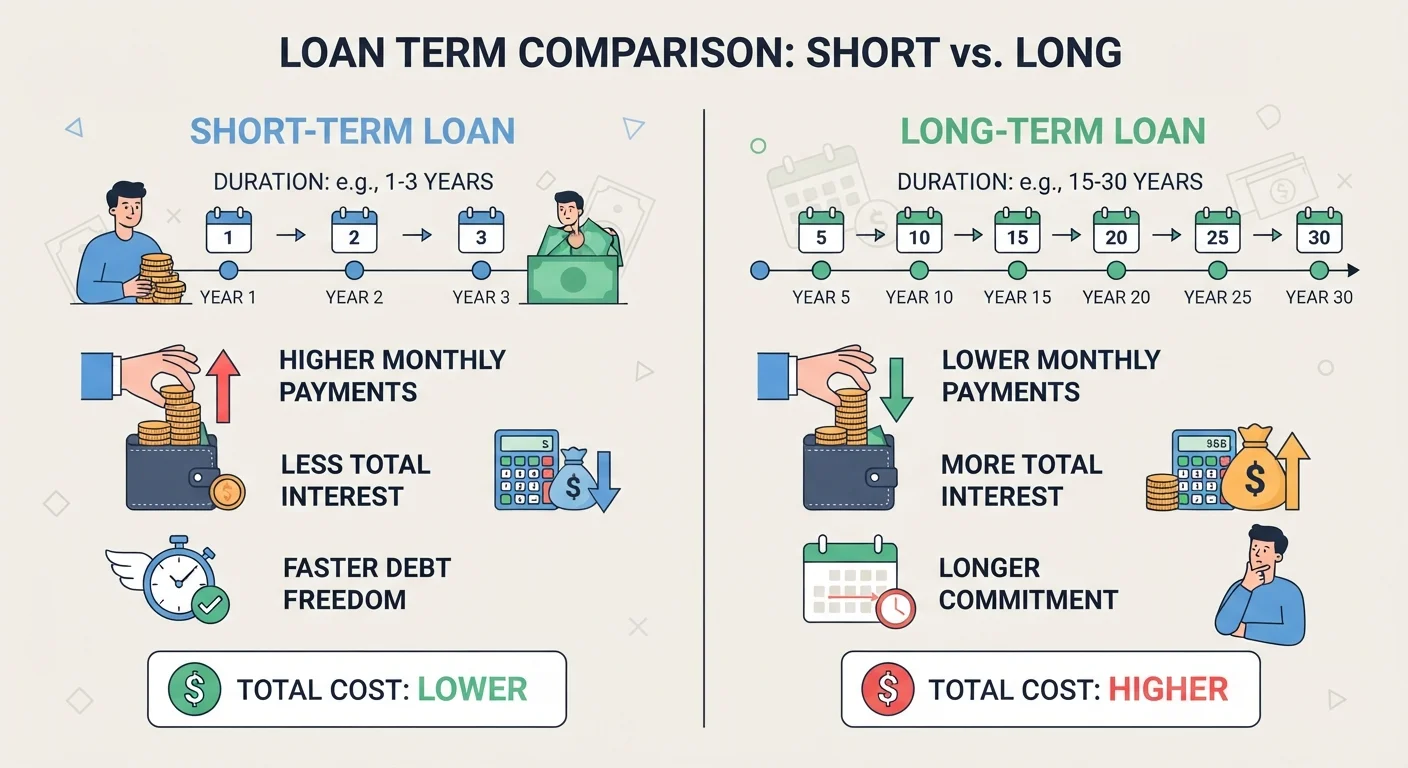
Photo credit: simplefuture.net
In this article
A 72-month loan has a lower monthly payment but costs more overall. Here is how to think through term length before committing.
Key Takeaways
- A longer loan term reduces your monthly payment but increases total interest paid.
- Stretching a loan to 72 or 84 months can cost hundreds or thousands more than a 48-month term.
- A car depreciates faster than a long loan pays down principal, which can leave you owing more than the car is worth.
- Comparing total loan cost, not just monthly payment, is the more informative way to evaluate financing offers.
- Consult a qualified financial adviser before making borrowing decisions tied to your specific situation.
Why the monthly payment is only part of the picture
When shopping for a vehicle, most people focus on the monthly payment. Lenders and dealers know this, which is why financing offers are usually presented as a monthly figure rather than a total cost. A $450 per month payment sounds more manageable than $27,000 in repayments, even when those two numbers describe the same loan.
The monthly payment is a cash flow number. The total amount you repay is the actual cost. Understanding the difference between the two is the starting point for evaluating any financing offer. For a fuller breakdown of how APR and loan mechanics interact, see how APR and loan terms affect what you owe.
72 months
Average new-car loan term in the US
According to Experian's State of the Automotive Finance Market reports, loan terms of 72 months or longer have become increasingly common for new vehicle purchases.
~30%
Typical new car value loss in first two years
Industry data from sources including Edmunds and Kelley Blue Book consistently show new vehicles lose roughly 20 to 30 percent of their value within the first 24 months.
Over 20%
US auto borrowers estimated to be underwater
Experian and Edmunds have both reported that a significant share of vehicle trade-ins carry negative equity, partly driven by longer loan terms.
How interest accumulates over a longer term
Interest on an auto loan is charged on the outstanding principal balance each month. Every payment you make is split between principal (reducing what you owe) and interest (the lender's fee). Early in a loan, a larger share of each payment goes to interest. As the balance falls, that ratio shifts in your favor.
Extending the term stretches the period during which a relatively high balance is outstanding. Even with an identical interest rate, you simply pay interest for more months. On a $25,000 loan at 6.5% APR, the difference between a 48-month term and a 72-month term is roughly $1,800 in additional interest, with no change to the rate or amount borrowed.
Longer terms also tend to carry slightly higher rates in practice. Lenders view multi-year exposure as greater risk, and that risk is priced into the APR. Before signing any agreement, review what to check before signing a car financing agreement to make sure you understand every line item.
Depreciation and the risk of negative equity
A new vehicle loses a significant portion of its market value in the first two to three years of ownership. A long loan term creates a mismatch: the car's value drops faster than the loan balance falls, particularly in the early months when most of each payment covers interest rather than principal.
This gap is called negative equity. A borrower who is underwater on a loan and needs to sell or trade in the vehicle will owe more than the sale covers. The shortfall either gets paid out of pocket or rolled into the next loan, increasing the new loan's starting balance. That cycle makes each subsequent financing decision more expensive. Vehicle depreciation and what it means for your wallet covers how quickly different vehicles lose value and how to factor that into ownership decisions.
Choosing a term that fits your actual budget
A shorter term is cheaper in total cost, but the monthly payment is higher. The question is whether that payment fits your budget without creating financial pressure. Missing payments or defaulting because you chose an aggressive term causes more financial damage than the interest savings justify.
A practical approach: calculate the total repayment amount for two or three term options, not just the monthly figure. Many banks and credit unions publish loan calculators that show total interest paid. Compare those totals before you commit. If a 60-month term is borderline affordable, a 66- or 72-month term might relieve the monthly strain, but make sure you know what the extra months cost in interest.
A down payment is one of the most direct ways to reduce both the monthly payment and total interest, because it shrinks the amount you borrow from the start. Auto loan terms explained for first-time borrowers covers down payments and other core loan concepts in plain language.
This article is general financial information and education, not personalised financial or lending advice. Speak with a qualified financial adviser or loan professional before making borrowing decisions based on your specific circumstances.
Frequently Asked Questions

Author
Finance Editorial Team
Finance Editorial Team is the collective byline for our editorial team and contributor network. Articles published under this byline or an editorial pen name are researched, written, and reviewed according to our editorial standards for clarity, consistency, and independence before publication.
View all articles →