
New Car vs. Used Car: What the Math Actually Looks Like for Families
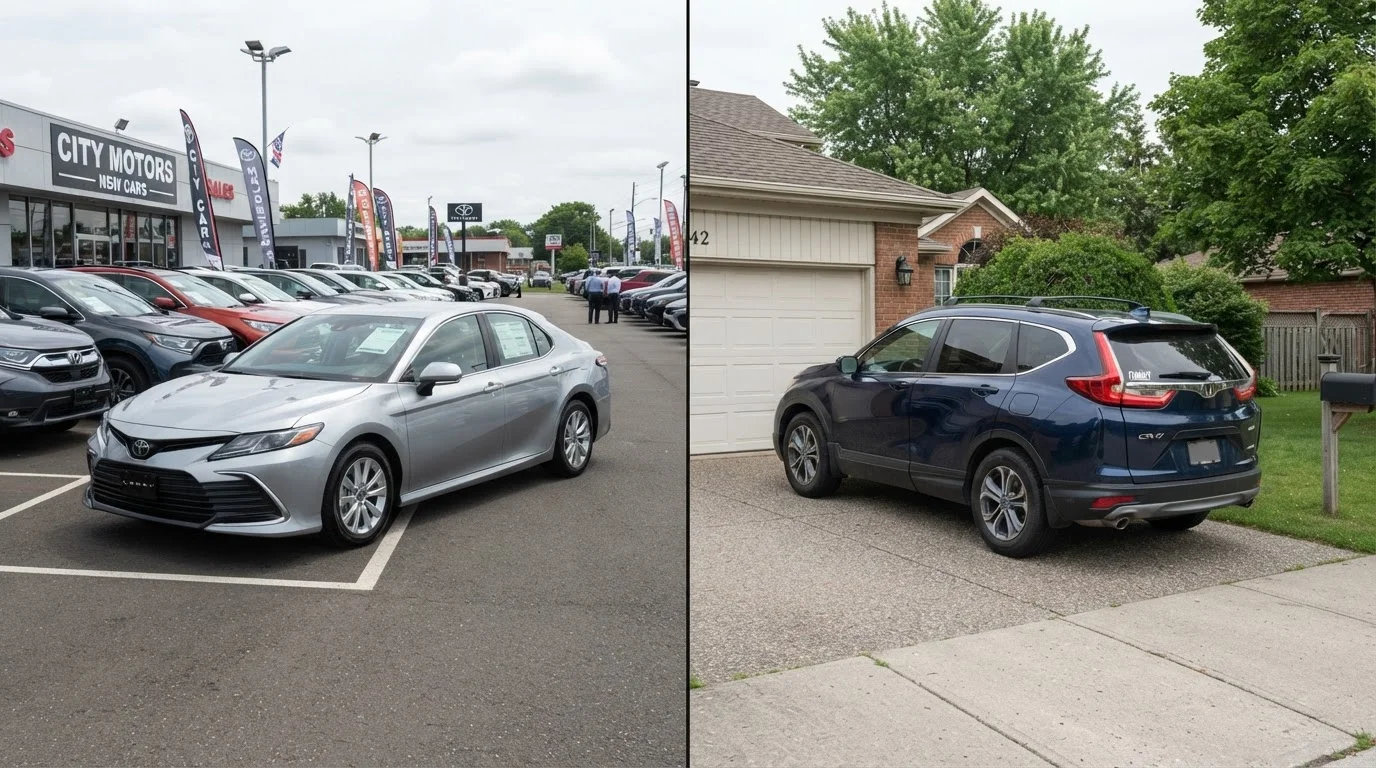
Photo credit: simplefuture.net
In this article
Weighing a new versus used vehicle purchase? This guide breaks down depreciation, financing, and reliability to help you think it through.
Key Takeaways
- New cars lose roughly 20% of their value in the first year, which benefits used-car buyers.
- Lower sticker prices on used vehicles do not always mean lower total ownership costs.
- Certified pre-owned programs extend warranty coverage on used cars but add to the purchase price.
- Loan interest rates on used vehicles are typically higher than new-car rates.
- A vehicle history report and pre-purchase inspection are essential steps before buying used.
- Total cost of ownership, not just the monthly payment, is the number that matters most.
How depreciation shapes the decision
Depreciation is the single biggest cost most car owners never see as a line item. A new vehicle typically loses around 20% of its value in the first year and close to 50% by the end of year five, according to general industry data tracked by automotive valuation services. That drop is not evenly spread: the loss is steepest in the earliest months.
For a family considering a used car, this is actually good news. Someone else absorbed that first-year decline. A three-year-old vehicle priced at $22,000 may have started life at $36,000 or more. The buyer of that used vehicle avoids roughly $14,000 in value loss that the original owner experienced.
The flip side is that new-car buyers who hold their vehicles for a long time eventually spread that depreciation across more years of use, which softens the annual cost. See our plain-language guide to car depreciation for a fuller breakdown of how these numbers play out over time.
| Criterion | New car | Used car |
|---|---|---|
| Starting price | Higher sticker price | Lower purchase price |
| Depreciation exposure | Buyer absorbs year-one drop | Prior owner absorbed drop |
| Typical loan interest rate | Generally lower | Generally higher |
| Manufacturer warranty | Full coverage from day one | Partial, expired, or CPO only |
| Insurance cost | Higher (greater replacement value) | Lower for same vehicle class |
| Registration fees | Higher in first year | Lower on older models |
| History transparency | No prior ownership history | Requires history report review |
| Safety feature availability | Latest standard features | Varies by model year |
Financing costs: rates, terms, and total interest paid
Monthly payment comparisons between new and used cars can mislead. A used car with a $22,000 price tag and a 9% interest rate on a 60-month loan generates more total interest than a new car financed at 5% on a $32,000 balance, depending on the loan term chosen. Used-car loan rates run higher because lenders treat older vehicles as greater collateral risk.
Manufacturer financing promotions on new vehicles sometimes include 0% or low-APR offers for qualified buyers, which can tilt the math significantly. These offers are tied to credit score and specific models, so not every family will qualify. Still, when comparing the two options honestly, a family should calculate total interest paid over the loan life, not just the monthly number.
~20%
Average new-car value lost in year one
Industry valuation data consistently shows new vehicles depreciate most sharply in the first 12 months of ownership.
1-3%
Typical rate gap: used vs. new auto loans
Used-car loan rates have historically run one to three percentage points above new-car rates at the same lender, though this varies by credit score and market conditions.
~50%
Value retained after five years on average
Many vehicles retain roughly half their original value by year five, though retention varies widely by make, model, and mileage.
For a complete picture of what you might spend annually across insurance, fuel, and maintenance, the annual auto ownership cost reference by vehicle class breaks down typical figures by vehicle type.
Reliability, warranties, and repair costs
New cars come with a manufacturer's bumper-to-bumper warranty, typically three years or 36,000 miles, and a powertrain warranty that often extends to five years or 60,000 miles. During that window, most mechanical failures fall under warranty coverage, which keeps out-of-pocket repair costs low.
A used car in its third year may have significant factory warranty remaining, or it may have none at all. A certified pre-owned (CPO) vehicle from a franchised dealership usually includes an extended warranty and a multi-point inspection, but the vehicle's price reflects those extras.
Before buying any used vehicle, pull a vehicle history report and arrange an independent pre-purchase inspection. Our guide on reading a used car's history report explains what to look for in those documents, and our used vehicle evaluation checklist gives a structured way to assess condition before committing.
Insurance and registration costs
New cars almost always cost more to insure than used ones of the same class. Comprehensive and collision coverage on a new vehicle is higher because the replacement value is higher. Lenders also require full coverage on any financed vehicle, new or used, until the loan is paid off.
Registration fees in many states are calculated on vehicle value or model year, so a new car carries a higher first-year registration cost. These line items are small compared to depreciation and financing, but they belong in a complete comparison.
Families doing a full cost analysis of their transportation spending may also find it useful to look at how vehicle choice interacts with other travel decisions, such as the real cost of flying vs. driving for a family of four.
This article is for general informational purposes only and does not constitute financial or legal advice. Consult a qualified financial professional before making significant purchasing decisions based on your specific circumstances.

Author
Auto Editorial Team
Auto Editorial Team is the collective byline for our editorial team and contributor network. Articles published under this byline or an editorial pen name are researched, written, and reviewed according to our editorial standards for clarity, consistency, and independence before publication.
View all articles →