
Composting at Home: What It Actually Takes and Whether It Is Worth the Effort
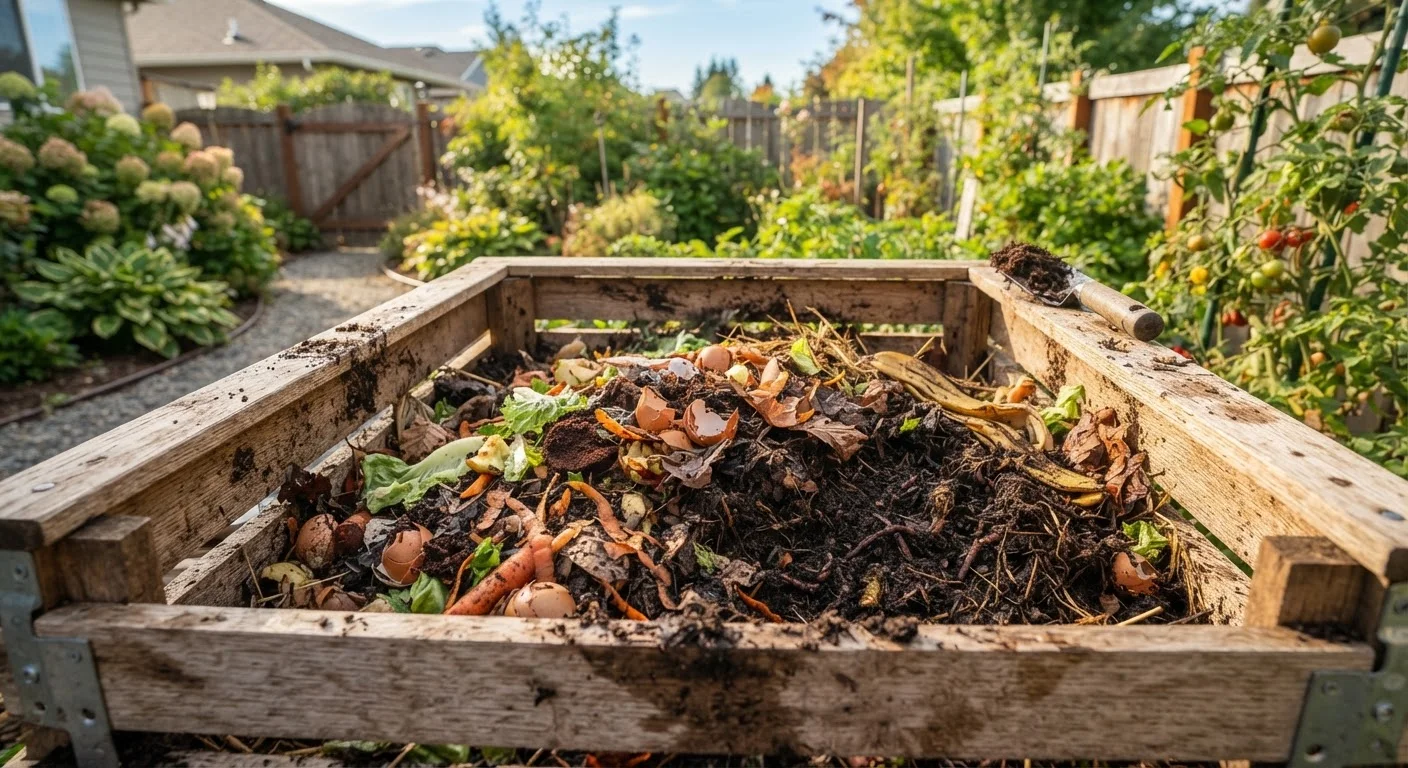
Photo credit: simplefuture.net
In this article
An honest breakdown of the time, space, and effort required for home composting, along with the real benefits for your garden soil.
Key Takeaways
- Home composting can produce free, nutrient-rich soil amendment, reducing what you spend on bagged fertilizers.
- A functional compost pile requires regular turning, balanced inputs, and enough space for at least a 3x3-foot bin.
- Results take three to six months under typical conditions, so composting rewards patience over speed.
- Odor and pest problems are real but preventable with correct layering and bin management.
- Composting is most worthwhile for households with an active vegetable or flower garden to feed.
Produces free soil amendment over time
Finished compost can replace bagged soil conditioner and compost, reducing what a gardening household spends each season on amendments.
Improves soil structure for multiple soil types
Adding compost improves drainage in clay soils and water retention in sandy soils, which benefits both vegetables and ornamental plants.
Reduces kitchen and yard waste sent to landfill
Food scraps and yard clippings composted at home avoid producing methane in landfills, a straightforward household waste reduction step.
Low startup cost with basic setup
A simple three-sided wooden bin can be built from scrap lumber, and even purchased bins are a one-time cost that pays back over multiple seasons.
Feeds soil biology, not just plant roots
Compost supports microbial communities in soil that make nutrients available to plants, an effect that synthetic fertilizers alone do not replicate.
Results take months, not weeks
Even with regular turning and balanced inputs, usable finished compost typically takes three to six months, and up to a year for a neglected pile.
Requires consistent attention and physical effort
Turning the pile every one to two weeks speeds the process noticeably, but that step is easy to skip and hard to recover from mid-season.
Odor and pest problems if managed poorly
A pile that is too wet or receives the wrong inputs can attract rodents or generate unpleasant odors, which creates neighbor and household friction.
Needs meaningful outdoor space
A properly functioning pile needs at least 9 square feet of footprint, which is impractical for households with very small yards or no outdoor space.
Limited value without a garden to use it
Without a vegetable bed, flower border, or lawn to receive the finished material, the effort produces a product with no clear destination.
What composting actually requires
Composting is the process of breaking down organic matter, such as fruit and vegetable scraps, yard clippings, and cardboard, into a stable, humus-rich material called finished compost. The biology behind it is straightforward: microorganisms consume carbon-rich and nitrogen-rich materials, generating heat and gradually reducing the pile to a dark, crumbly amendment.
To get there, you need four things in rough balance: carbon materials (dried leaves, shredded cardboard, straw), nitrogen materials (food scraps, fresh grass clippings, coffee grounds), moisture, and oxygen. A pile that is too wet and airless will smell. A pile that is too dry and carbon-heavy will stall. Most problems trace back to one of these four inputs being off.
Space is a practical constraint. A pile smaller than 3 feet by 3 feet generally does not generate enough internal heat to decompose efficiently or suppress weed seeds. That means a minimum footprint of about 9 square feet, and ideally two bins side by side so you can move material from one to the other while turning. If your yard is small, a contained tumbler-style bin can work in a tighter footprint, though it has a smaller capacity.
Time is the other real cost. Turning the pile every one to two weeks speeds decomposition. Skipping that step is fine, but the process slows to 12 months or more. A household that turns consistently and keeps inputs balanced can see usable compost in three to six months.
The real benefits
Produces free soil amendment over time
Finished compost can replace bagged soil conditioner and compost, reducing what a gardening household spends each season on amendments.
Improves soil structure for multiple soil types
Adding compost improves drainage in clay soils and water retention in sandy soils, which benefits both vegetables and ornamental plants.
Reduces kitchen and yard waste sent to landfill
Food scraps and yard clippings composted at home avoid producing methane in landfills, a straightforward household waste reduction step.
Low startup cost with basic setup
A simple three-sided wooden bin can be built from scrap lumber, and even purchased bins are a one-time cost that pays back over multiple seasons.
Feeds soil biology, not just plant roots
Compost supports microbial communities in soil that make nutrients available to plants, an effect that synthetic fertilizers alone do not replicate.
The most direct payoff is soil improvement. Finished compost adds organic matter that improves drainage in clay soils, improves water retention in sandy soils, and feeds the microbial communities that make nutrients available to plant roots. If you are already spending money on bagged compost or soil conditioner each season, producing your own removes that recurring cost. For context, a 40-pound bag of bagged compost runs several dollars at most garden retailers, and a productive home bin can generate enough material to replace several bags annually.
There is also a waste-reduction benefit. Food scraps sent to a landfill decompose without oxygen, producing methane. Composting those same scraps at home is a simple way to reduce that contribution. For families working to trim grocery waste, composting provides a practical outlet for vegetable peels, eggshells, coffee grounds, and past-prime produce.
Composting pairs well with food gardening. If you are starting a vegetable garden, finished compost can build up a new bed's soil quality faster and more cheaply than repeated purchases of bagged amendments.
The real drawbacks
Results take months, not weeks
Even with regular turning and balanced inputs, usable finished compost typically takes three to six months, and up to a year for a neglected pile.
Requires consistent attention and physical effort
Turning the pile every one to two weeks speeds the process noticeably, but that step is easy to skip and hard to recover from mid-season.
Odor and pest problems if managed poorly
A pile that is too wet or receives the wrong inputs can attract rodents or generate unpleasant odors, which creates neighbor and household friction.
Needs meaningful outdoor space
A properly functioning pile needs at least 9 square feet of footprint, which is impractical for households with very small yards or no outdoor space.
Limited value without a garden to use it
Without a vegetable bed, flower border, or lawn to receive the finished material, the effort produces a product with no clear destination.
Most of the frustrations with home composting come from three sources: odor, pests, and impatience. Odor is almost always a sign that the pile is too wet, too nitrogen-heavy, or not turned enough. Adding more carbon material (dried leaves or torn cardboard) and turning the pile usually resolves it within a few days. Pest pressure, from rodents in particular, increases when cooked food, meat, or dairy goes into the bin. Sticking to raw fruit and vegetable scraps, coffee grounds, and yard waste largely avoids that problem.
The learning curve is real but short. Most people who abandon composting do so in the first season before the process clicks. Once you understand what a healthy pile looks like and smells like, maintenance becomes routine rather than guesswork.
One thing composting cannot do is replace mulch. If your primary soil need is moisture retention and weed suppression at the surface, mulch does that job. Compost works below the surface. See our guide to mulch trade-offs for a clearer picture of which material serves which purpose.
Is it worth the effort for your household?
30%
Household waste that is compostable
The U.S. Environmental Protection Agency estimates that food and yard waste together make up roughly 30 percent of what American households throw away.
3-6 months
Typical time to finished compost
University cooperative extension services generally cite three to six months as the range for an actively managed bin under temperate conditions.
3x3 ft
Minimum recommended bin footprint
Most composting guides, including those from state extension programs, identify a 3-foot by 3-foot pile as the minimum size for adequate heat generation.
The answer depends mainly on what you plan to do with the finished material. A household with raised beds or an in-ground garden gets clear value from a regular supply of finished compost. The soil requirements for raised beds in particular make homemade compost a meaningful cost offset, since raised beds need more amendment per season than in-ground plots.
For households without an active garden, the math is harder. Composting kitchen scraps is still an environmentally reasonable habit, but the product has nowhere useful to go unless you share it with neighbors, donate it to a community garden, or use it to top-dress a lawn.
If you are already doing weekend yard work to build curb appeal, as covered in our yard improvement guide, composting yard waste rather than bagging it for curbside pickup is a low-effort way to keep that organic material on your property.
Start small. A single bin, a reliable source of fallen leaves for carbon, and a habit of saving vegetable scraps is all a first-time composter needs. Expand only once the process feels manageable.
This article is for general informational and educational purposes. Costs, timelines, and results vary by household, climate, and composting method. Verify any local regulations about outdoor composting bins before getting started.

Author
Home & Garden Editorial Team
Home & Garden Editorial Team is the collective byline for our editorial team and contributor network. Articles published under this byline or an editorial pen name are researched, written, and reviewed according to our editorial standards for clarity, consistency, and independence before publication.
View all articles →