
Vehicle Maintenance Tasks Worth Doing Yourself vs. Those That Need a Mechanic
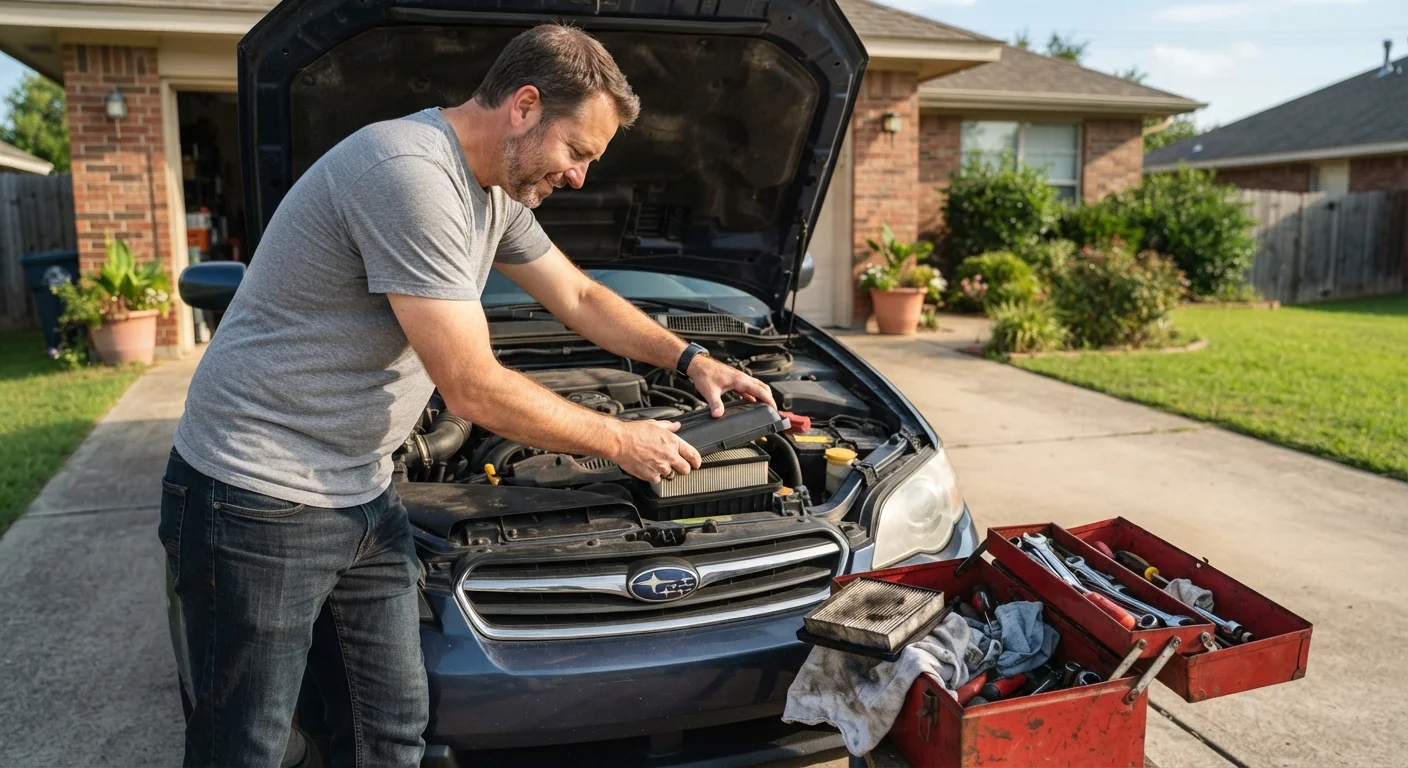
Photo credit: simplefuture.net
In this article
Some upkeep is safe and simple for drivers to handle; other jobs require professional tools and training. Know the difference before you start.
Key Takeaways
- Air filter swaps, wiper blade changes, and cabin filter replacements are safe for most drivers to handle at home.
- Brake work, suspension repairs, and anything involving the fuel or electrical system generally require a licensed mechanic.
- DIY maintenance can save $50 to $150 per service visit on straightforward tasks, but mistakes on complex jobs can cost far more.
- Your owner's manual is the most reliable guide for service intervals and fluid specifications.
- Skipping professional inspection on safety-critical systems puts occupants at risk, regardless of cost savings.
Why the DIY vs. mechanic question matters for your budget
Routine vehicle upkeep adds up fast. According to AAA, the average American driver spends over $1,200 per year on maintenance and repairs, and that figure does not include tires or major component replacements. Knowing which jobs you can safely do yourself and which ones genuinely require a shop can meaningfully reduce that total without putting your vehicle or your safety at risk.
The decision is not just about money. Botched brake work, incorrectly torqued wheel bolts, or improperly reinstalled suspension components can cause accidents. The goal is an honest assessment of each task, not a blanket rule that one approach is always better. See how maintenance spending fits into your broader ownership picture with the annual auto ownership cost reference for your vehicle class.
Tasks most drivers can handle themselves
These jobs share a few traits: they require basic tools, carry low consequences for minor errors, and have clear step-by-step guidance in nearly every owner's manual.
Engine air filter
On most vehicles, the air filter sits in a plastic housing that unclips without any tools. A new filter costs $15 to $30 at most auto parts stores. Shops often charge $50 to $80 for the same job. The only real risk is putting the new filter in backward, which is visible on inspection and easy to correct before closing the housing.
Cabin air filter
This filter cleans the air inside the car and is usually behind the glove box or under the dashboard. Replacement takes 10 to 15 minutes and the part costs $15 to $25. Many shops charge $40 to $70 for labor alone.
Windshield wiper blades
Wiper blades are among the simplest swaps on any vehicle. The replacement blades include instructions, and the job takes about five minutes per blade. Attempting this is low-risk because wipers are not a safety-critical system in the way brakes are, though worn blades do reduce visibility in rain.
Light bulbs (select exterior lights)
On many older vehicles, replacing a burned-out taillight or turn signal bulb requires removing a cover and swapping the bulb. Newer vehicles with LED assemblies and tightly packaged engine bays can make this genuinely difficult, so check your owner's manual before assuming it is simple.
Topping off fluids
Windshield washer fluid, coolant (when the engine is cold), and power steering fluid can all be checked and topped off without professional help. Use only the fluid types specified in your owner's manual. Mixing coolant types, for example, can cause corrosion inside the cooling system.
| Task | DIY | Mechanic | |
|---|---|---|---|
| Engine air filter | Yes, straightforward | Unnecessary for most drivers | |
| Cabin air filter | Yes, 10-15 minutes | Unnecessary for most drivers | |
| Wiper blades | Yes, very simple | Not needed | |
| Brake pad replacement | Only with real mechanical experience | Recommended for most drivers | |
| Suspension components | Not advised without proper tools | Required; alignment needed after | |
| Timing belt or chain | Not advised | Required | |
| Electrical/check engine diagnosis | Not practical without scan tools | Required | |
| Topping off fluids | Yes, use correct fluid types | Not necessary for top-offs |
Jobs that belong at a shop
Some tasks look simple on a video but carry serious risks when done incorrectly at home. These are the categories worth paying for.
Brake system work
Replacing brake pads is often presented as a beginner DIY job, and while the mechanical steps are not complex, errors are dangerous. Improperly seated calipers, incorrect torque on brake bolts, or a disturbed brake line can cause brake failure. Unless you have genuine mechanical experience and the right tools, brake work is best left to a professional. Deferring brake inspections is also one of the costlier deferred-maintenance mistakes drivers make.
Suspension and steering components
Shocks, struts, control arms, and tie rods affect how your vehicle handles and how it stops. Replacing these parts requires a spring compressor (a tool that can cause serious injury if misused), and most suspension work requires a professional alignment afterward. An out-of-alignment vehicle wears tires unevenly and handles poorly.
Transmission service
Automatic transmission fluid changes sound straightforward, but on many modern vehicles the process requires specific fluid, a drain pan capacity most DIYers do not have, and a scan tool to reset the transmission's adaptive learning. Errors can damage a component that costs $2,000 to $5,000 to replace.
Electrical diagnosis
Modern vehicles have dozens of electronic control modules. Diagnosing a check engine light, an ABS warning, or an airbag fault requires a professional-grade scan tool and training to interpret the results. Clearing a code without fixing the underlying cause just delays a legitimate repair.
Timing belt or chain service
This is one of the most labor-intensive services on a vehicle. Getting it wrong can destroy an engine. The job typically costs $500 to $1,000 at a shop, which is substantial, but an engine replacement costs many times more.
How to decide on any given task
A few practical questions help clarify the call for any specific job:
- Does the task require tools you do not own and would not use again?
- Is there a safety-critical system involved (brakes, steering, suspension, airbags)?
- Does an error risk damaging an expensive component?
- Does your vehicle's warranty require dealer or certified-shop service for this item?
If you answer yes to any of those, the shop visit is likely worth the cost. Maintenance spending is one part of total ownership cost, and keeping major systems in professional hands reduces the risk of large, unplanned repair bills. The impact of deferred maintenance on your vehicle's value is another reason to stay current on professional services.
This article is for general informational purposes only. For repairs involving safety systems, always consult a licensed, qualified mechanic. Verify service intervals and fluid specifications with your vehicle's owner's manual or a certified technician.

Author
Auto Editorial Team
Auto Editorial Team is the collective byline for our editorial team and contributor network. Articles published under this byline or an editorial pen name are researched, written, and reviewed according to our editorial standards for clarity, consistency, and independence before publication.
View all articles →