
Raised Bed vs. In-Ground Garden: Which Works Better for a Tight Budget?
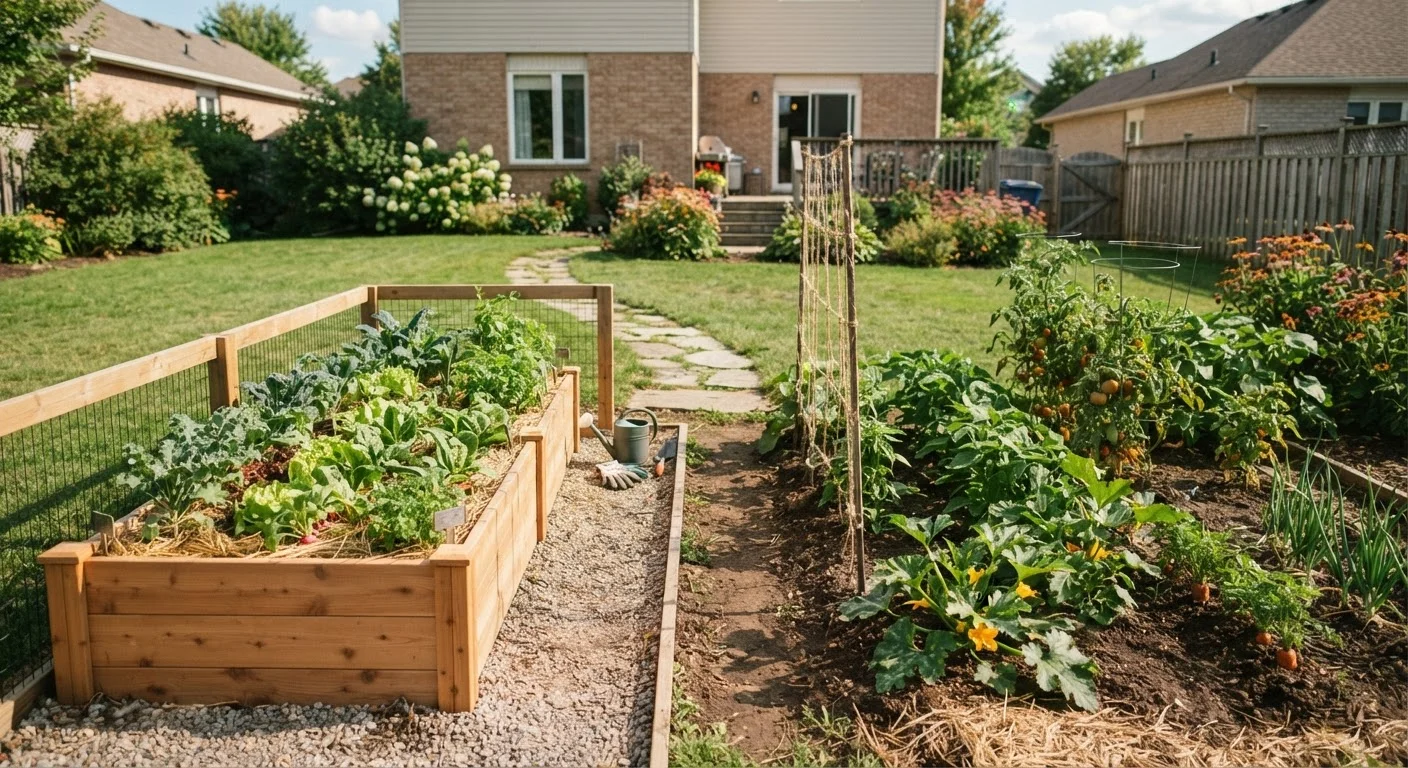
Photo credit: simplefuture.net
In this article
A practical side-by-side look at setup costs, soil needs, and long-term effort for raised beds versus in-ground vegetable gardens.
Key Takeaways
- In-ground gardens typically cost far less to start, often under $50 for basic tools and amendments.
- Raised beds require a higher upfront investment in materials and purchased soil, commonly $100 to $400 or more depending on size.
- Raised beds can warm faster in spring and drain better, which may extend your growing season.
- In-ground plots benefit from natural soil biology and rainfall but may need more weed management.
- Both approaches can be productive and budget-friendly when matched to your actual soil and site conditions.
Startup costs: where the real difference shows
The gap between these two methods is widest at the very beginning. An in-ground vegetable garden can start for under $50 if you already own a shovel and a garden fork. You may need a bag or two of compost and, depending on your soil, a pH test kit. That is roughly the full bill.
A raised bed involves more variables. Lumber alone for a single 4x8-foot frame costs $30 to $80 depending on wood type and local pricing. Cedar and redwood resist rot longer but cost more; untreated pine is cheaper but may need replacing within a few years. Beyond lumber, you need hardware, brackets or screws, and enough soil mix to fill the frame. A 4x8 bed filled 10 inches deep needs roughly 27 cubic feet of soil. Buying a premixed blend at a garden center for that volume typically runs $80 to $150. The total startup cost for one modest raised bed commonly lands between $120 and $300.
If you have multiple beds in mind, those costs multiply. Buying bulk topsoil and compost from a local supplier rather than bagged retail products can reduce soil costs noticeably, though you still need a way to transport or have it delivered.
For families starting a food garden on a tight budget, an in-ground plot with amended native soil is the lower-risk financial entry point. See our guide to starting a home food garden for soil basics and realistic first-season expectations.
Soil quality and long-term inputs
In-ground gardening depends heavily on what your yard already has. If your soil is loamy and well-draining, you mostly need to add organic matter annually and manage weeds. If it is dense clay, rocky, or compacted, you will spend time and money amending it before most vegetables perform well. A soil test from your local cooperative extension office, often available for $15 to $25, tells you exactly what your ground needs so you are not guessing.
Raised beds give you full control from day one. You fill them with a mix you select, typically a blend of topsoil, compost, and a material like perlite or aged bark for drainage. That control is a genuine advantage in poor-soil situations. The trade-off is that raised bed soil breaks down faster than native ground. You will need to top up beds with compost each season, and the mix may compact over two to three years without regular additions.
Home composting can offset this cost over time. A steady supply of finished compost cuts what you spend on purchased amendments for either garden type. Mulching is also worth considering for both setups. Our article on mulch trade-offs covers why material choice matters more than price alone.
| Criterion | Raised bed garden | In-ground garden |
|---|---|---|
| Typical startup cost | $120 to $300+ per bed | Under $50 with basic tools |
| Soil control | Full control over mix | Dependent on native soil |
| Weed pressure (first year) | Generally lower | Often higher |
| Water retention | Drains faster, dries quicker | Holds moisture longer |
| Spring soil warmup | Earlier by 2 to 3 weeks (cold climates) | Slower to warm |
| Annual soil inputs needed | Regular compost top-up required | Lighter if native soil is decent |
| Physical accessibility | Better with taller build | Requires bending and kneeling |
| Long-term frame maintenance | Wood repair or replacement over time | No frame costs |
Practical factors: weeds, water, and season length
Weed pressure is one of the most time-consuming costs in gardening, and the two methods handle it differently. A fresh raised bed filled with purchased soil typically starts with fewer weed seeds than native ground, which can mean noticeably less hand-weeding in the first season or two. Over time, wind-blown seeds and bird activity introduce weeds into any garden, so the advantage narrows.
In-ground beds in established yards often face more persistent weed competition, particularly from perennial weeds that have deep root systems in the surrounding soil. Landscape fabric or thick mulch layers can reduce this, though neither eliminates it entirely.
Watering costs follow a similar pattern. Raised beds drain well, which helps roots but also means they dry out faster in summer heat. In-ground beds hold moisture longer and may need less frequent irrigation, a small but real operating cost difference over a full season.
Season length is one area where raised beds have a measurable edge. The contained soil mass warms earlier in spring than surrounding ground, sometimes by two to three weeks in colder climates. That window can matter for short-season crops or for families trying to extend productivity before the first frost. In mild climates, the difference is minor. Thoughtful placement of either garden type also affects performance. Our article on yard planning covers site selection as part of broader outdoor improvements.

Author
Home & Garden Editorial Team
Home & Garden Editorial Team is the collective byline for our editorial team and contributor network. Articles published under this byline or an editorial pen name are researched, written, and reviewed according to our editorial standards for clarity, consistency, and independence before publication.
View all articles →