
Reading a Used Car's History Report: What the Numbers and Codes Actually Mean
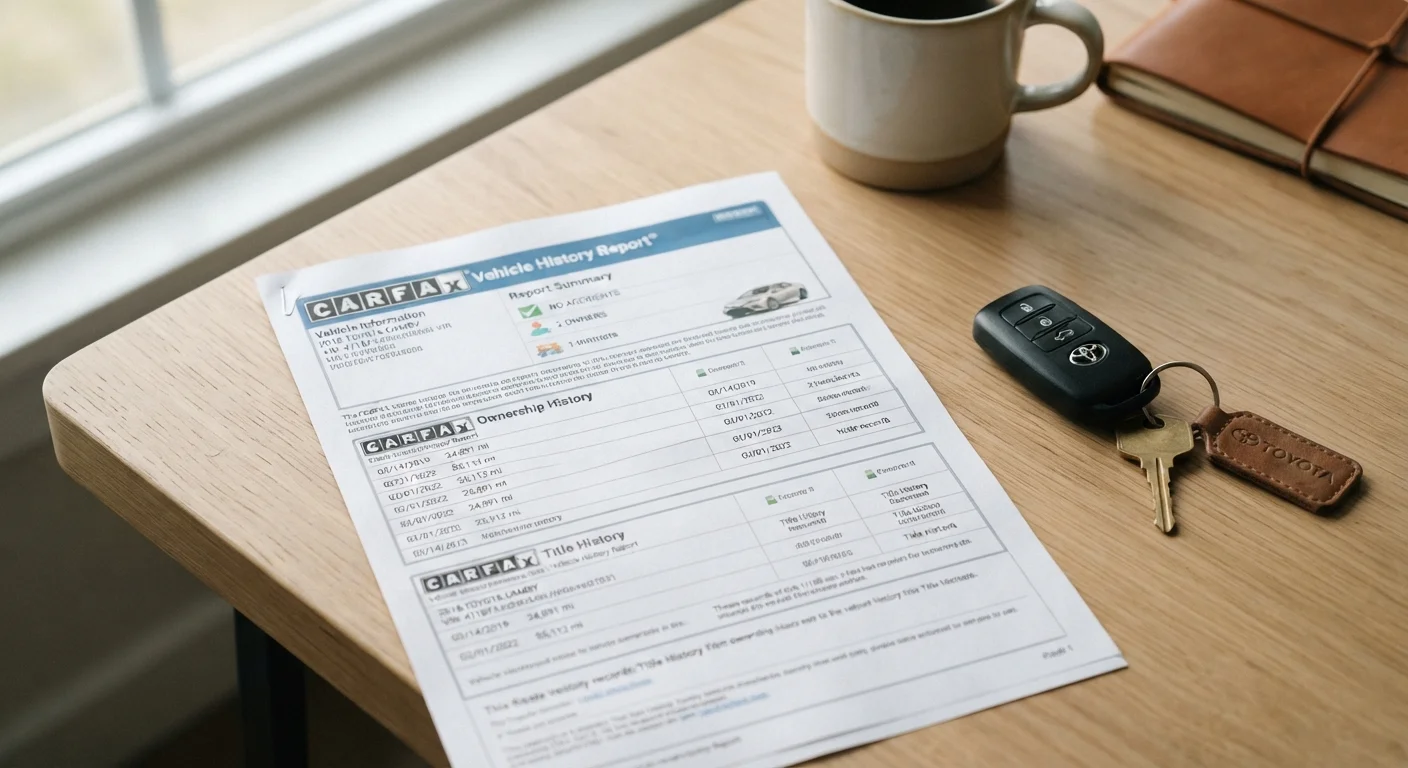
Photo credit: simplefuture.net
In this article
Vehicle history reports contain a lot of data. This plain-language guide explains what to look for and what should raise a red flag.
Key Takeaways
- The VIN ties every record in a history report to one specific vehicle.
- Title brands like 'salvage' or 'flood' can affect safety and resale value significantly.
- Odometer discrepancies may indicate fraud and should never be dismissed.
- A history report is a starting point, not a substitute for a professional inspection.
What a vehicle history report actually contains
A vehicle history report pulls records from state DMVs, insurance companies, auto auctions, police departments, and other data sources, then ties them all to one car using its VIN. The VIN is a 17-character code stamped on a plate visible through the windshield on the driver's side dashboard. Before you read anything else in a report, confirm the VIN on the report matches the VIN on the car.
Reports typically include ownership history, title records, odometer readings at registration, accident and damage disclosures, lien records, and service history when dealers or shops report it. Not every event in a vehicle's life gets reported, so a clean report does not guarantee a problem-free car. Think of it as a document review, not a physical inspection. For a complete pre-purchase process, pair the report with the steps in this used vehicle evaluation checklist.
Title brands: the codes that matter most
The title section is where most serious problems show up. States assign a title brand to vehicles with significant damage or legal issues, and those brands follow the car permanently. Here are the ones you are most likely to see:
- Clean: No reported major damage or legal issues. The most common status on used cars, but it does not rule out unreported problems.
- Salvage: The vehicle was declared a total loss by an insurance company, typically because repair costs exceeded a set percentage of the car's value. A salvage title does not automatically mean the car is dangerous, but repairs may be substandard and financing can be difficult to obtain.
- Rebuilt or reconstructed: The car had a salvage title, was repaired, and passed a state inspection. Some states have thorough inspection processes; others do not. Resale value is lower, and some insurers will only offer liability coverage.
- Flood or water damage: Submersion or heavy water intrusion can corrode wiring, electronics, and structural components in ways that are hard to detect and expensive to repair.
- Lemon law buyback: A manufacturer repurchased the vehicle under a state lemon law because of recurring defects. The car may have been repaired and resold, but the underlying issue history is worth scrutinizing.
- Junk or scrapped: The vehicle was designated for destruction. If one of these appears on a car being sold as driveable, walk away.
Any title brand other than "clean" should prompt additional research and, at minimum, an independent mechanical inspection before you consider buying.
Reading the ownership and registration timeline
The ownership section shows how many times the vehicle has changed hands and in which states it was registered. A few things worth noting:
Multiple owners in a short window, say three owners in two years on a five-year-old car, can suggest recurring problems that prompted each sale. It is not automatic proof of an issue, but it warrants direct questions to the current seller.
Registration gaps, periods where the car does not appear in any state's records, may mean it was stored, taken off the road, or operated in a state that does not report well to national databases. Ask the seller about any gap longer than a few months.
State-to-state transfers are worth noting because title laws vary. A car with a salvage title in one state can sometimes receive a clean title in another state after a minimal inspection, a practice sometimes called title washing. If the car moved between states with a jump in title status, look closely at what happened and when.
States vary in what they report
Some states report title and registration data to national databases more reliably than others. A car with most of its history in a low-reporting state may show fewer records than one registered in a state with thorough reporting. Fewer records in the report does not always mean fewer events in the car's actual history.
Odometer readings and why inconsistencies are serious
Every time a car is registered or sold through a regulated channel, the odometer reading is recorded. The history report lines these readings up chronologically. A legitimate vehicle shows steady mileage increases over time.
Watch for readings that go backward (100,000 miles in year three, then 60,000 miles in year four) or that jump dramatically without explanation. Odometer fraud, also called rollback, is a federal offense under the Truth in Mileage Act, but it still occurs. A discrepancy does not always confirm fraud since data entry errors happen, but any backward or implausible reading needs a direct explanation from the seller and verification through additional service records.
High mileage is not by itself a problem. A well-maintained vehicle with 150,000 miles can be more reliable than a neglected one with 60,000. What matters is whether the mileage history is consistent and whether maintenance records support it. If you are weighing total cost of ownership over time, the guidance in new car vs. used car math for families can help frame that decision.
Accident and damage records
Accident entries in a history report come from insurance claims, police reports, and auction disclosures. The report usually notes severity (minor, moderate, or severe) and which area of the vehicle was affected. A single minor fender repair on a well-maintained car is not necessarily a dealbreaker. Structural damage, airbag deployments, or multiple incidents are more serious concerns.
One limitation: private-party accidents that were not reported to insurance or police will not appear. A car can have significant undisclosed damage and still show no accident history. This is exactly why a pre-purchase inspection by an independent mechanic, someone not connected to the seller, is worth the cost. The mechanic can put the car on a lift and check for frame repairs, mismatched paint, and uneven panel gaps that a history report will never capture.
Once you have worked through the history report and had the car inspected, the next step is understanding the financing side. Auto loan terms explained for first-time borrowers covers what APR, loan term, and down payment mean in plain language before you sit across from a lender.
This article is for general informational purposes only and does not constitute financial, legal, or mechanical advice. Verify all vehicle records and consult a qualified mechanic and, where relevant, a licensed professional before making any purchase decision.

Author
Auto Editorial Team
Auto Editorial Team is the collective byline for our editorial team and contributor network. Articles published under this byline or an editorial pen name are researched, written, and reviewed according to our editorial standards for clarity, consistency, and independence before publication.
View all articles →