
Road Trips on a Tight Budget: What Actually Saves Money and What Doesn't
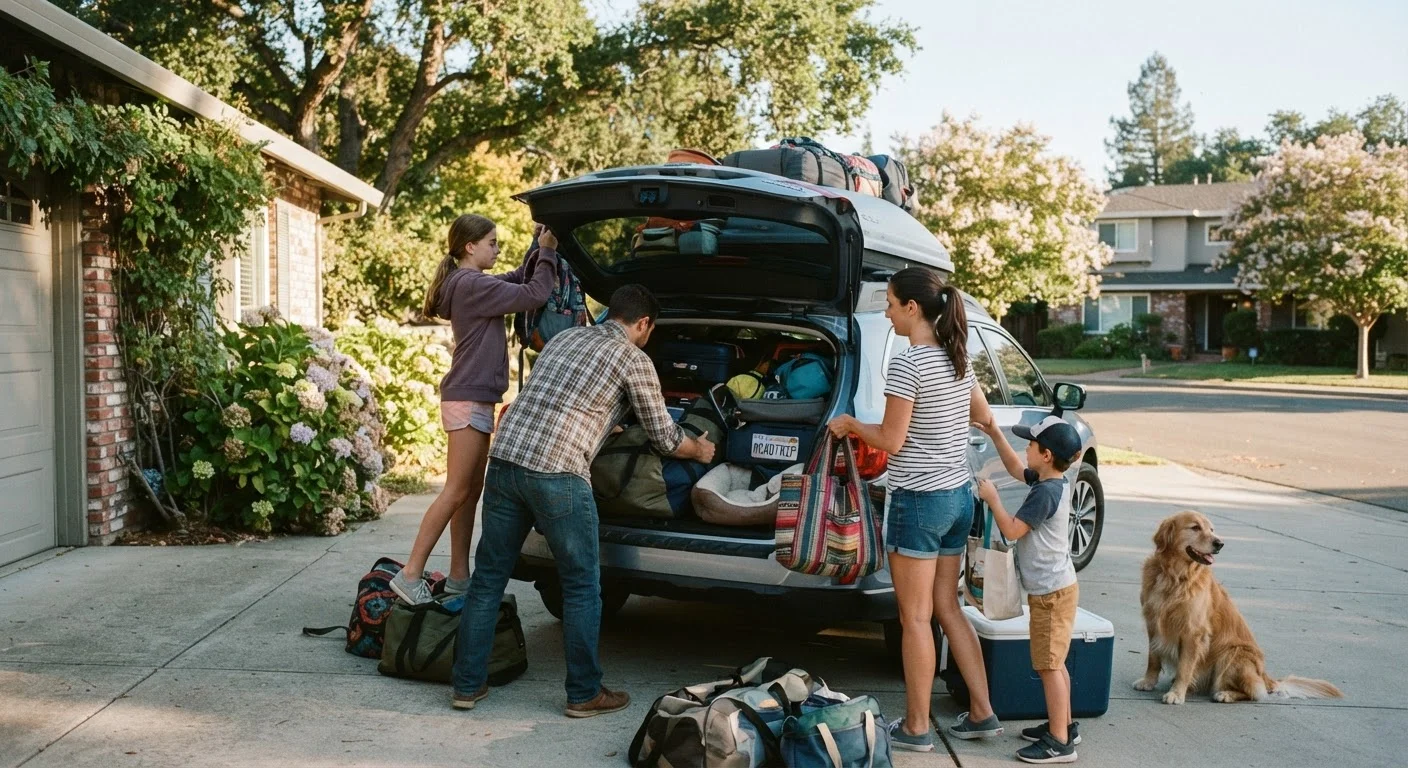
Photo credit: simplefuture.net
In this article
Separating road trip cost myths from reality. Learn which strategies genuinely cut expenses for US families hitting the highway.
Key Takeaways
- Driving is not always cheaper than flying once you account for fuel, tolls, food stops, and overnight stays.
- Packing your own food is one of the few road trip strategies that consistently delivers real savings.
- Driving slower and keeping tires properly inflated are free actions that measurably cut fuel costs.
- Camping and budget lodging only save money if the route and timing actually support them.
- Skipping vehicle maintenance before a long drive often creates repair costs far larger than the savings.
Why road trip budgets go sideways
Road trips carry a reputation as the frugal family vacation. Load everyone into the car, skip the airport, and watch the savings roll in. The reality is more complicated. Many families arrive home surprised by how much they spent, because the mental math at the start of the trip left out several real costs.
The good news is that separating genuine savings from wishful thinking is straightforward once you know where the myths cluster. The strategies below address the most common ones, covering fuel, food, lodging, and vehicle prep.
For a broader look at how driving stacks up against flying in total dollars, see this cost comparison for a family of four. The gap between the two options is often narrower than families expect.
Myth versus reality on the road
These are the cost assumptions that trip up families most often, and what the evidence actually supports.
Myth
Driving is almost always cheaper than flying for a family vacation.
Fact
Driving can cost more than flying once fuel, tolls, food stops, and one or two nights of lodging are added up honestly.
Gas alone for a 1,200-mile round trip in a midsize SUV averaging 24 mpg comes to roughly 50 gallons. At regional average prices, that is a real line item before a single meal or hotel room. Add two nights of lodging, fast food stops for four people, and highway tolls on corridors like I-95 or the Ohio Turnpike, and the total climbs fast. Families who do this math carefully sometimes find that a fare sale beats the car. The calculation depends on the specific route, vehicle, and travel style, so running the numbers before you leave is worth the 20 minutes it takes.
Myth
Buying gas at every station you pass keeps costs down by avoiding an empty tank.
Fact
Fuel prices vary significantly by location, and planning fill-ups at lower-cost stops saves more than topping off constantly.
Gas prices can differ by 30 to 50 cents per gallon between stations a few miles apart, particularly near highways versus side streets, and between states with different fuel tax structures. Apps and websites that display real-time prices along a route let drivers plan fill-ups at cheaper stops rather than paying the premium at the first exit. Carrying a slightly lower fuel level through a higher-priced stretch costs almost nothing and preserves the savings at the next planned stop. Common fuel economy myths covers related habits that also affect what you spend per mile.
Myth
Driving fast to cover more ground saves money by reducing lodging costs.
Fact
Higher speeds reduce fuel economy meaningfully, and the savings on lodging rarely offset the extra fuel cost.
The U.S. Department of Energy notes that fuel economy drops noticeably above 50 mph and falls more steeply above 60 mph, with every 5 mph over 60 roughly equivalent to paying an extra 8 to 24 cents per gallon depending on the vehicle. On a long drive, the fuel penalty from cruising at 80 mph instead of 70 mph can add up to tens of dollars. Shaving a few hours off a trip to avoid one hotel night often requires speeds that eat into the savings, and the benefit vanishes if traffic or detours add time anyway.
Myth
Camping is always the cheapest lodging option on a road trip.
Fact
Campsite fees, required gear, and off-route driving can make camping cost more than a budget motel for some families.
National Park campgrounds and popular state park sites in peak season regularly book months in advance and charge fees that, for a family needing multiple tent sites or an RV hookup, can reach $40 to $80 per night. If your route does not pass near a campground, driving out of the way adds fuel cost and time. Families without camping gear face upfront equipment costs that take multiple trips to amortize. For families already equipped and camping on-route, it remains a genuine money-saver. For everyone else, a budget motel chain closer to the highway may come out cheaper per night with no detour required.
Myth
Skipping a pre-trip mechanic check saves money on a tight budget.
Fact
A breakdown on a rural highway can cost far more in towing and emergency repairs than any pre-trip inspection fee.
Roadside towing costs depend heavily on distance and location, but bills of $150 to $400 or more are common for non-members without roadside coverage, and that does not include the repair itself. Catching a worn belt, low coolant, or a tire near failure before the trip is far less expensive than addressing it 200 miles from home. Many chain auto shops offer multi-point inspection checks at low or no cost. The better lens for this is not "save money now" but "avoid a much larger unplanned expense later." This breakdown of deferred maintenance costs puts real numbers to that risk.
What genuinely moves the needle
A few habits do produce consistent savings across almost any road trip. Packing a cooler with sandwiches, snacks, and drinks cuts food spending faster than almost any other single action. Highway rest stops and gas station food add up to surprising totals when multiplied across a multi-day drive.
Timing matters too. Traveling outside peak summer weeks and school-holiday windows reduces both lodging rates and traffic-related fuel waste. Shoulder-season travel can make a real difference for families with schedule flexibility.
Lodging choices deserve honest comparison before booking. A vacation rental with a kitchen can reduce restaurant spending enough to justify a higher nightly rate, but only if the family actually cooks most meals. Comparing rentals and hotels on total trip cost rather than per-night price often changes the math.
Finally, vehicle prep before departure is not optional. Checking tire pressure, topping fluids, and confirming that scheduled maintenance is current costs little time and can prevent breakdowns that carry four-figure repair and towing bills. Deferred maintenance has a documented dollar cost that grows the longer it is delayed.

Author
Travel Editorial Team
Travel Editorial Team is the collective byline for our editorial team and contributor network. Articles published under this byline or an editorial pen name are researched, written, and reviewed according to our editorial standards for clarity, consistency, and independence before publication.
View all articles →