
Free and Low-Cost Online Learning Resources Worth Knowing About
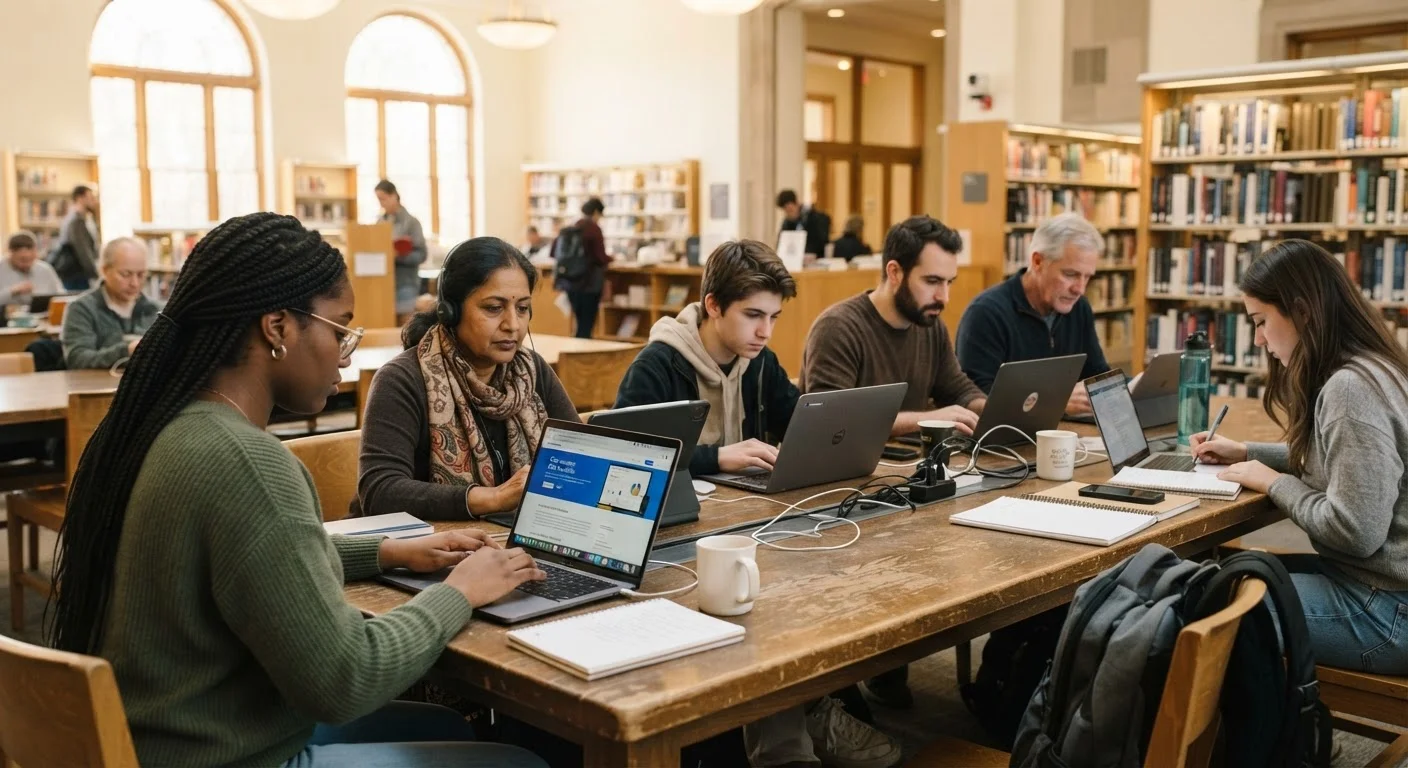
Photo credit: simplefuture.net
In this article
From open courseware to public library platforms, explore legitimate free and low-cost learning tools available to students of all ages.
Key Takeaways
- Public libraries often provide free access to professional learning platforms at no cost to cardholders.
- Federal and university open courseware programs let anyone audit college-level material without paying tuition.
- Many legitimate free resources cover coding, language learning, test prep, and vocational skills.
- Low-cost subscription platforms can cost less per month than a single textbook.
- Combining free tools with <a href="/education/dual-enrollment-high-school-college-credits">dual enrollment</a> or community college can stretch an education budget further.
Why free and low-cost learning resources matter
The cost of formal education has risen faster than inflation for decades, according to data from the National Center for Education Statistics (NCES). That gap puts pressure on families trying to build skills, support students, or prepare for a career change without taking on significant debt. Free and low-cost online resources do not replace accredited degrees in every context, but they can reduce how much paid coursework a student needs, fill knowledge gaps between semesters, and give learners a genuine head start.
The list below covers resources that are free to access or available at low cost through libraries, nonprofit programs, or subsidized platforms. None require a purchase decision today; the goal is to help you understand what each option is and who it suits best.
Start with your library card
Before signing up for any paid platform, log in to your public library's website and look for a 'digital resources' or 'e-learning' section. Many libraries license professional learning tools that residents can access free with a card. It takes five minutes to check and could save you a subscription fee.
For students thinking beyond supplemental learning, see how starting at community college can cut four-year degree costs while keeping university options open.
Eight resources worth exploring
Public library digital platforms
Many US public libraries provide cardholders free access to platforms such as Kanopy (documentary and educational film streaming) and Libby (e-books and audiobooks). Some library systems also license access to LinkedIn Learning or similar professional skills platforms at no charge to residents. All you need is a valid library card, which itself is free in most jurisdictions.
Check your local library's digital resources page or ask a librarian what learning tools your card unlocks. The range varies by system, but urban and suburban libraries often have more than most patrons realize.
A free library card can unlock professional learning platforms most people assume cost money.
MIT OpenCourseWare and similar university programs
MIT OpenCourseWare publishes lecture notes, problem sets, and exams from hundreds of MIT courses at no cost. Yale, Johns Hopkins, and other major universities run comparable open courseware programs. These materials do not award credit or credentials, but they give motivated learners direct access to the same content enrolled students use.
Open courseware suits students who want to preview a subject before paying for a formal course, or who want to deepen understanding in an area they are already studying elsewhere.
Open courseware from major universities is free and covers the same material enrolled students use.
Khan Academy
Khan Academy is a nonprofit that provides free, self-paced instruction in math, science, history, computing, and test preparation (including SAT and LSAT prep developed in partnership with the College Board). The platform tracks progress and adapts to skill level, making it practical for both K-12 students and adults returning to foundational topics.
Because it is fully free and requires only an email to register, it carries no financial risk and is a reasonable first stop for anyone brushing up on core subjects.
Khan Academy's SAT prep was developed with the College Board and is entirely free to use.
Coursera and edX audit options
Both Coursera and edX offer audit tracks for many of their courses. Auditing lets learners watch lectures and access most course materials at no cost; the fee applies only if you want a verified certificate at the end. Courses come from universities and professional organizations and span business, technology, data science, humanities, and more.
If a certificate matters for employment or applications, weigh the cost against alternatives. If the goal is learning the material itself, auditing is a straightforward way to access structured content without paying.
Auditing a course on Coursera or edX gives access to university content without the certificate fee.
Code.org and freeCodeCamp
Code.org is designed primarily for K-12 students and introduces programming concepts through structured, age-appropriate activities. FreeCodeCamp targets older learners and offers a full curriculum in web development, data analysis, and related fields, along with free certifications that some employers recognize.
Both platforms are nonprofit and entirely free. FreeCodeCamp in particular has a large community forum, which can help learners who get stuck without access to a paid instructor.
FreeCodeCamp offers certifications in web development and data analysis at no cost.
Duolingo and language learning apps
Duolingo offers free, gamified language instruction in dozens of languages. The free tier is ad-supported and covers most of the curriculum; a paid tier removes ads and adds a few extra features. For families with children learning a second language or adults preparing for travel or professional contexts, the free version covers substantial ground.
Language learning apps work best as supplements to conversation practice rather than standalone fluency programs, but for vocabulary and grammar foundations they are cost-effective.
Duolingo's free tier covers most of its language curriculum across dozens of languages.
YouTube educational channels
YouTube hosts a large volume of structured educational content from universities, science communicators, and professional educators. Channels affiliated with institutions such as CrashCourse, the National Geographic Society, and various university departments publish full lecture series and explainer content at no cost.
The absence of a structured learning path is the main limitation. YouTube suits learners who already know what they want to study and can self-direct, rather than those who need a guided curriculum with feedback.
University-affiliated YouTube channels publish full lecture series that anyone can watch for free.
Low-cost subscription platforms
Platforms such as Skillshare and MasterClass charge a monthly or annual subscription rather than per-course fees. Monthly costs are typically less than the price of a single college textbook. These are not free, but for families who need access to multiple skill areas, a single subscription can cover a wide range of topics for one household.
Skillshare leans toward creative and business skills; MasterClass features longer-form instruction from professionals in various fields. Neither awards academic credit, but both can support skill development between formal education milestones.
A single low-cost platform subscription can cover multiple skill areas for an entire household.
How to choose what fits your situation
No single platform works for every learner. A high school student preparing for the SAT has different needs than a working parent learning spreadsheet skills or a recent graduate exploring a career pivot. Before committing time to any resource, check whether it covers the subject at the right level, whether completion carries any recognized credential, and whether your public library already gives you free access to a paid platform you were about to buy.
Free resources also pair well with other low-cost strategies. Scholarship search myths often lead students to overlook aid that could fund formal coursework once free options have confirmed a genuine interest area. Similarly, comparing trade school and a four-year degree becomes easier when you have already sampled vocational content online at no cost.
This article is for general informational purposes only. Program availability, costs, and platform features change over time. Verify current details directly with each provider before making enrollment or financial decisions.
Author
Education Editorial Team
Education Editorial Team is the collective byline for our editorial team and contributor network. Articles published under this byline or an editorial pen name are researched, written, and reviewed according to our editorial standards for clarity, consistency, and independence before publication.
View all articles →